


Receiving a job offer in another state or wanting to relocate closer to family can be an exciting opportunity. However, for parents with shared custody arrangements, the question quickly arises: can one parent move with a child without the other parent’s consent? The answer in California is complex and depends on several factors.
This guide will help answer your questions, but it’s strongly advised to consult our Board-Certified Sacramento child custody lawyer for a detailed review of your situation.
Understanding California's Relocation Custody Laws
When parents share custody of their children, California law recognizes that both parents have important rights to maintain relationships with their children. Moving out of state with shared custody isn't simply a matter of packing up and leaving. It requires careful navigation of legal requirements to protect children's stability and relationships with both parents.
California Family Code Section 7501 governs relocation cases, while Section 3024 addresses notification requirements. These statutes establish that parents cannot unilaterally decide to move children away from the other non-moving parent without following proper legal procedures. Failing to comply with these requirements can result in serious consequences, including potential loss of child custody rights or even criminal charges for custodial interference. In other situations, there are strategies for winning a child custody case.
The Critical 45-Day Notice Requirement

If you're considering relocation with your child, the first legal obligation you must fulfill is providing written notice to the other parent. California law mandates that you give at least 45 days' advance notice before any proposed move that could affect the existing child custody arrangement.
This notice should include specific information about your relocation plans, including your new address, the reason for the move, and a proposed modification to the current visitation schedule. The 45-day window serves an important purpose. It gives the other parent adequate time to evaluate how the move would impact their relationship with the child and decide whether to consent or object.
Protect Your Child Custody Rights Today
Whether relocating or responding to your co-parent’s move, an experienced California custody attorney can help protect your rights and your child’s best interests.

Can You Move Without the Other Parent's Permission?
The answer to whether one parent can move with children without the other parent's consent depends largely on your child custody arrangement and the specifics of your situation.
Primary Custody vs. Joint Physical Custody
California courts distinguish between parents who have primary physical custody and those who share relatively equal custodial time. If you are the primary custodial parent and your child lives with you most of the time, California law usually allows you to move with your child, even if the other parent disagrees. However, this presumption isn't absolute, and the non-relocating parent can challenge the move by demonstrating it would harm the child's welfare.
The landmark case In re Marriage of LaMusga (2004), from the Supreme Court of California, established that when a parent has primary child custody, the burden falls on the objecting parent to prove the relocation is not in the child's best interest. Conversely, when parents share relatively equal physical custody time, courts take a fresh look at the entire situation, as established in In re Marriage of Burgess (1996).
When Court Approval Is Required

Moving out of state with shared custody typically requires either the other parent's written consent or a court order permitting the relocation. Even moves within California may require court approval if they're substantial enough to interfere with the existing child custody arrangement. While there's no specific mileage threshold, moves of 50 miles or more are generally scrutinized, as are any moves that would make the current visitation schedule impractical.
The Relocation Hearing Process
When parents cannot reach a custody agreement about a proposed move, the matter proceeds to a relocation hearing where a family court judge makes the final determination.
Factors Courts Consider
California judges evaluate relocation requests through the lens of the child's best interests. This multifaceted standard includes examining:
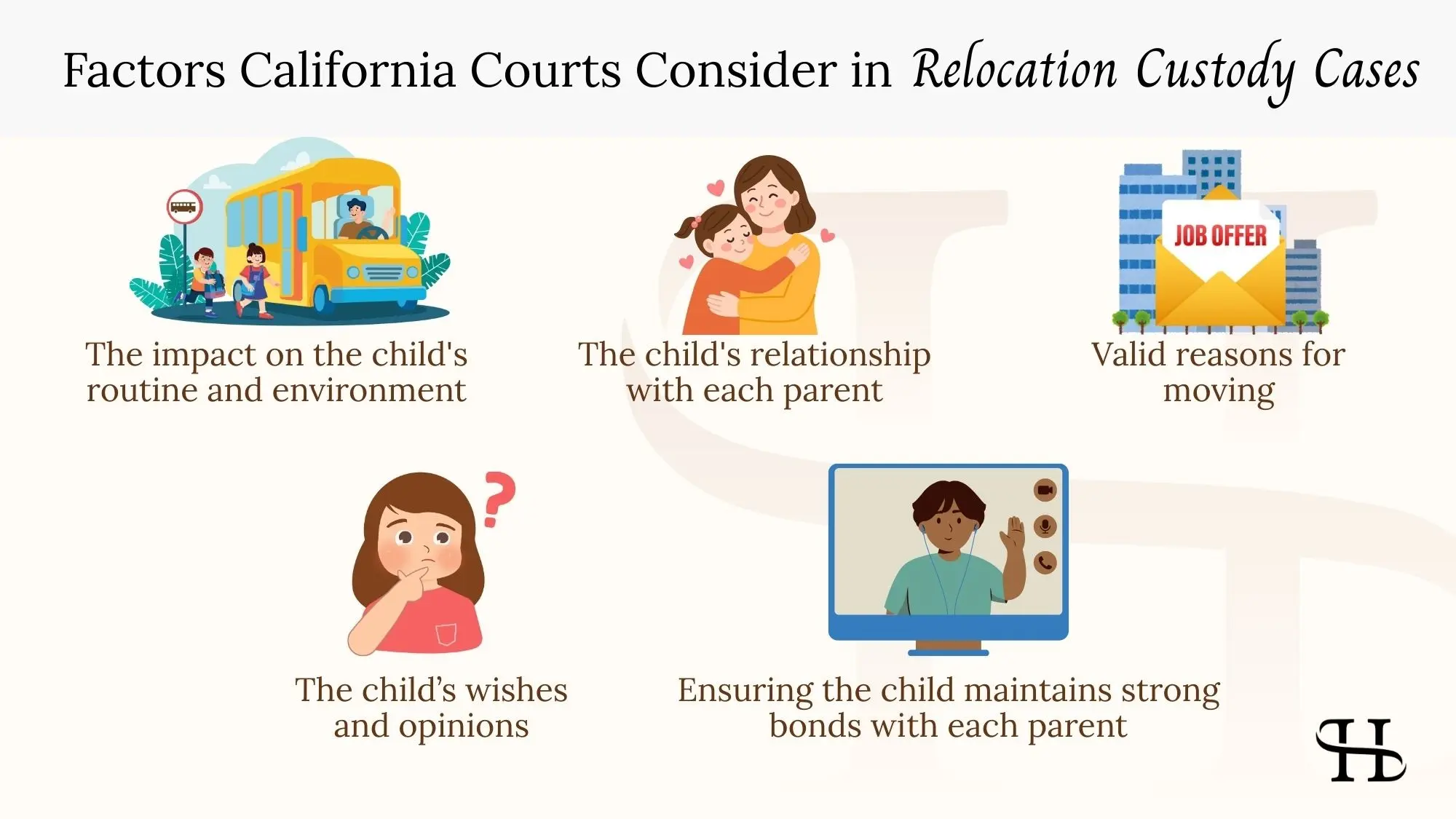
The Child's Stability and Continuity
Courts consider how the move would impact the child's educational environment, friendships, extended family relationships, and community ties. A child who has lived in the same neighborhood, attended the same school, and maintained close friendships for years faces significant disruption when relocating.
Relationships with Both Parents
Judges assess the quality and strength of the child's bond with each parent. A move that severely limits a child's ability to maintain a meaningful relationship with the non-relocating parent raises serious concerns.
Reasons for Relocation
The court examines your motivation for moving. Legitimate reasons include accepting a significantly better job opportunity, pursuing advanced education, moving closer to extended family support networks, or escaping an unsafe living situation. However, if the court suspects your primary motivation is to frustrate the other parent's relationship with the child, your request will likely be denied.
The Child's Preferences
Depending on the child's age and maturity level, courts may consider their wishes about the relocation. California law doesn't specify a particular age at which children's preferences become relevant, but judges typically give more weight to the views of teenagers than to those of younger children.
Encouraging the Child’s Bond with Both Parents
Courts favor parents who demonstrate a willingness to maintain the child's connection with both parents, even after relocation. Proposing a reasonable modified visitation plan that includes extended summer visits, holiday arrangements, and regular video communication strengthens your position.
Burden of Proof
Understanding who bears the burden of proof in your relocation case is crucial. With primary child custody, you start with a presumptive right to relocate, and the other parent must prove the move would harm the child. With equal shared custody, you must affirmatively demonstrate that relocating serves your child's best interests.
Updates to California Relocation Laws

Recent changes to California's family law procedures have impacted how relocation cases proceed. As of 2024, mandatory mediation is now required before any relocation hearing. This policy shift aims to reduce adversarial court battles and encourage parents to reach collaborative solutions that work for their unique family circumstances.
Additionally, courts have implemented streamlined procedures allowing for expedited hearings in relocation matters, recognizing that prolonged uncertainty about living arrangements can be particularly stressful for children. New judicial guidelines also provide judges with more structured frameworks for evaluating relocation requests, leading to more consistent decision-making across different cases.
Practical Steps for Parents Seeking to Relocate
If you're contemplating a move with your children, taking the right approach from the beginning can make a significant difference in the outcome.
- Start with open communication: Talk honestly with your co-parent about your plans, reasons for moving, and how you’ll support their relationship with the children.
- Propose a modified parenting plan: Suggest concrete solutions like extended summer visits, alternating holidays, and regular video calls to keep connections strong.
- Address financial realities: Be prepared to discuss child support and travel costs, as courts often expect the relocating parent to cover increased expenses.
- Gather supporting documentation: Collect evidence such as job offers, school information, housing details, and community resources to support your case in court.
What If You're the Non-Relocating Parent?

If your co-parent has notified you of their intent to relocate with your child, you have rights and options. Acting promptly is essential — the 45-day notice period passes quickly.
First, consider whether you can work out a custody agreement that preserves your meaningful involvement in your child's life despite the distance. If not, you'll need to file an objection with the court before the proposed move date.
Your strongest arguments focus on demonstrating how the relocation would harm your child rather than simply inconvenience you. Evidence might include your active involvement in the child's daily life, the strength of your bond, negative impacts on the child's education or special needs services, or concerning motivations behind the move.
The Role of Mediation
Mediation offers a valuable alternative to contentious court battles. A neutral mediator can help both parents communicate more effectively, identify creative solutions, and reach agreements that traditional litigation might not produce. Consulting with an experienced family law attorney before or during the mediation process can also ensure that your rights and your child’s best interests are protected. Even if you ultimately need a judge's decision, participating in good-faith mediation demonstrates your commitment to cooperative co-parenting.
Protecting Your Rights and Your Child's Future
Relocating with children under a shared custody arrangement in California is never a simple decision. It requires balancing legal requirements, parental rights, and, above all, your child’s well-being. By understanding the laws, preparing properly, and seeking legal guidance, you can better protect your family’s future. Don’t leave your rights or your child’s stability to chance. Consult our custody attorney today.
.avif)
.avif)

