When domestic violence affects a family, parents can face urgent questions about safeguarding their children while navigating California law. The legal intersection of restraining orders and child custody can be confusing, especially when you’re unsure how the courts might decide your family’s future.
If you’re seeking protection and custody-related guidance, working with an experienced Sacramento restraining order attorney can clarify your legal options and help you build a strong case. This guide breaks down how California courts handle restraining orders in custody cases and what steps you can take to protect your child.
Types of Restraining Orders That Affect Child Custody in California
California makes several types of restraining orders available, each of which serves a different purpose and has a distinct timeline. Knowing which kind of order applies to your situation will help you take the right legal steps.
Emergency Protective Order (EPO)
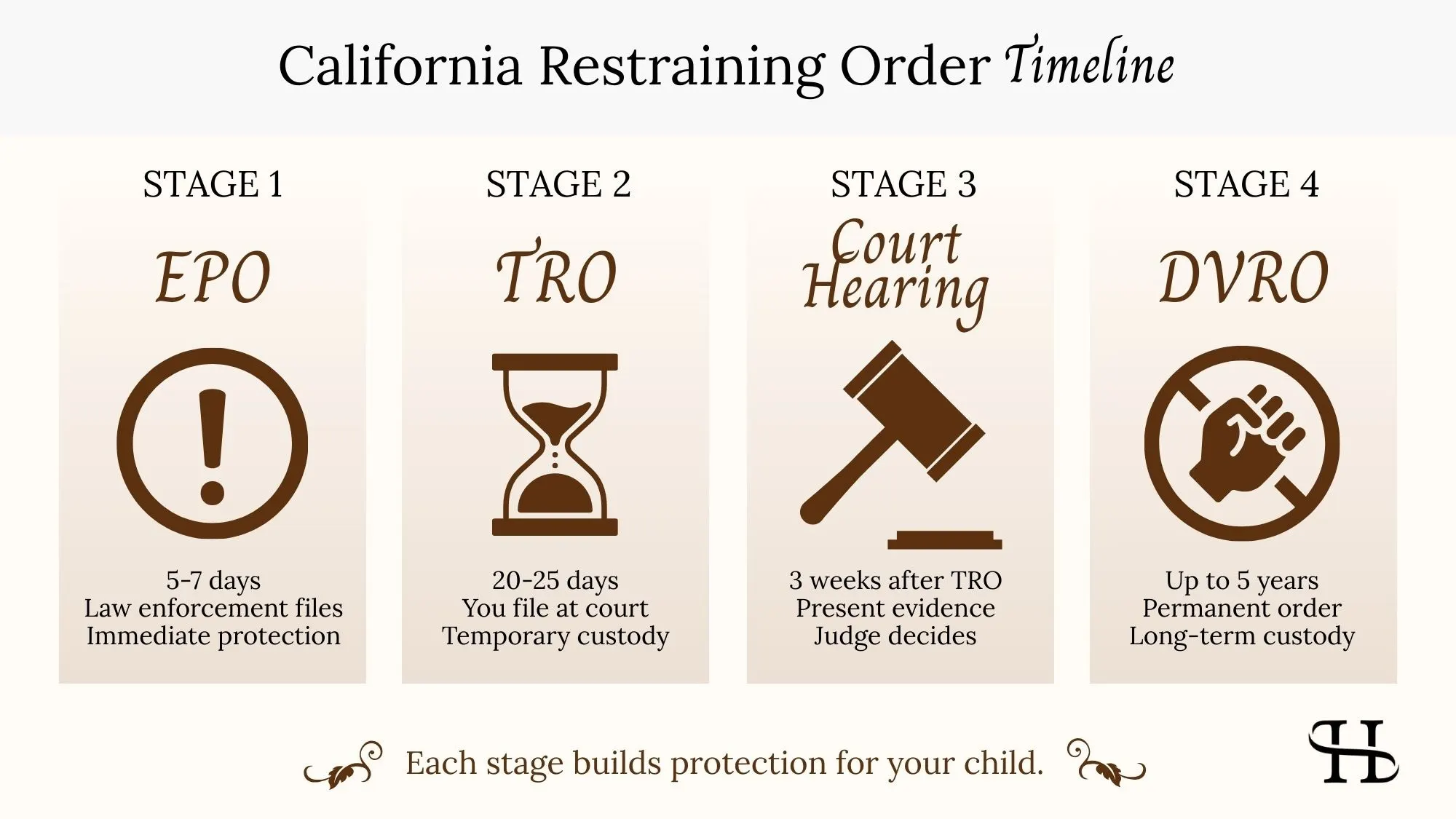
Law enforcement can request an EPO on your behalf at the scene of domestic violence. This emergency order is valid for five to seven days and provides immediate protection until you can file for a temporary restraining order.
Temporary Restraining Order (TRO)
You can file for a temporary restraining order at the courthouse; if granted, it will remain in effect for 20–25 days until your court hearing. A TRO can include temporary custody arrangements and “stay away” provisions that keep the abusive parent at a distance. The court makes these decisions based on the initial petition and sworn statements about the abuse.
Domestic Violence Restraining Order (DVRO)
If the judge finds evidence of domestic violence after your court hearing, they’ll convert the temporary restraining order to a domestic violence restraining order, which lasts up to five years. This permanent restraining order can impact custody decisions and create long-term legal protections for you and your child.
Each type of restraining order can potentially serve as a building block toward permanent protection. Courts use these legal dictates as evidence when determining what custody arrangement will best serve your child’s interests.
How California Courts Prioritize Child Safety in Custody Cases

California law puts the child’s safety first through specific legal standards. When domestic violence is present, courts apply heightened scrutiny to custody and visitation decisions.
The “Best Interests of the Child” Standard
Domestic violence is a serious issue that can override other considerations, like maintaining contact with both parents. According to data from the Judicial Council of California, cases involving domestic violence are rated among the most difficult in family court mediation, with 39% of cases rated 8 or higher on a 10-point difficulty scale.
Family Code Section 3044 — The Rebuttable Presumption
When a court finds that a parent has committed domestic violence within the last five years, California law presumes that it’s detrimental to award custody to the abusive parent. This is known as a “rebuttable presumption”.
The parent who perpetrated domestic violence must prove that they’ve changed through completing a batterer’s treatment program, drug abuse counseling (if applicable), and parenting classes, and demonstrating no ongoing threat.
Sole Custody vs. Joint Custody Considerations
California courts frequently award sole legal and physical custody to the protected parent when claims of domestic violence are substantiated. Joint custody is discouraged when a restraining order against one parent is active, as courts recognize that coparenting with someone who has committed domestic violence poses ongoing risks to children.
The law doesn’t just consider abuse — it creates a legal barrier that abusive parents must overcome to gain custody. This framework gives protective parents stronger legal ground when seeking full custody arrangements that prioritize the child’s safety.
Effects of Filing a Restraining Order on Custody

The moment you file a restraining order, your custody situation can change. Courts often make emergency custody decisions to protect children from immediate danger.
Temporary Custody Orders
When you file for a TRO, you can request temporary custody in the same petition using court forms specifically designed for family law matters. If granted, this gives you legal custody until the full hearing, usually within three weeks. The judge will review your evidence and determine whether a temporary order is necessary to protect your child from the alleged abusive parent.
Supervised Visitation Requirements
Courts may order supervised visitation if the restrained parent poses a risk to the child’s safety. Supervision can occur at a professional center or other neutral location or with an approved third party who monitors the child’s well-being during visits.
The restrained parent typically pays for supervision costs, which preserves their visitation rights while maintaining crucial boundaries of safety.
No-Contact Provisions
Restraining orders often include “stay away” orders requiring the restrained person to maintain a certain distance (typically 100 yards) from the filer, their home, their workplace, and their child’s school. Violations can result in arrest and criminal charges, which may influence any ongoing custody proceedings.
Long-Term Impact on Custody Rights
Once a DVRO is granted, the consequent custody arrangements can last for years, potentially reshaping your family structure.
California courts make custody determinations based on a documented history of abuse, with the presumption favoring sole custody for the protected parent. The abusive parent must complete court-ordered programs and demonstrate substantial behavioral change before the courts will consider modifying a custody order to allow unsupervised time with the child.
These immediate protections can create some much-needed breathing room while you prepare for your full custody hearing. They will also establish a court record of protective measures that can strengthen your larger child custody case.
What Courts Consider When Reviewing Restraining Orders in Custody Cases
Judges evaluate multiple factors when connecting a restraining order to custody decisions. Presenting the right evidence can mean the difference between gaining vital protection and facing an uphill legal battle.
Types of Evidence That Can Strengthen Your Case
Robust documentation forms the backbone of a successful restraining order and a strong child custody case. Courts rely on concrete evidence rather than verbal testimony alone, so gathering comprehensive proof of domestic violence is essential for protecting yourself and your child.
Police Reports and Arrest Records
Official documentation of domestic violence incidents carries significant weight in court, especially when the abusive parent was convicted or placed on probation for violent behavior.
Medical Records and Photographs
Visual evidence of injuries can help verify abuse and explain the reasonable apprehension you experienced during and after violent incidents.
Text Messages, Emails, and Voicemails
Threatening or controlling communications can demonstrate patterns of abusive behavior and help establish the history of violence that the court needs to apply Family Code protections.
Witness Statements
Third-party accounts from neighbors, friends, or family members can be useful for corroborating your experiences and enhancing your credibility with the judge.
Therapy or Counseling Records
Professional documentation can convey the psychological impact on you and your child, which will help the courts determine the child’s best interests in custody determinations.
How Courts Assess Risk to Children

Judges specifically examine whether a child witnessed violence, whether the abusive parent directed violence toward the child, and whether substance abuse or weapons were involved in the domestic violence incidents. They also consider the age of the child and their expressed fears or preferences regarding custody and visitation arrangements.
California courts use these factors to decide whether contact with the abusive parent poses an ongoing risk and whether protective measures like supervised visitation or limited custody are necessary.
A qualified family law attorney can assist you in organizing documentation and presenting it effectively in court hearings.
Modifying Custody After Getting a Restraining Order
Custody orders aren’t always permanent, and either parent can request modifications as circumstances change. If you hold a restraining order with a child involved, you need to know how custody changes can affect your protection.
When the Restrained Parent Seeks Custody Modification
The restrained parent may file to modify custody after completing court-ordered programs like a batterer’s treatment program, drug abuse counseling, and parenting classes. They must prove that they no longer pose a risk and that changing custody serves the child’s best interests under California Family Code standards.
Courts scrutinize these requests closely, particularly when a DVRO is still active, as the child’s well-being is the foremost concern.
When You Need to Modify Custody or Visitation
You might seek to modify custody or visitation arrangements in situations involving ongoing violations of the restraining order, new incidents of abuse, or the child expressing fear of the other parent during visitation.
Recent legislation (SB 459) streamlines the process for requesting modifications to restraining orders, making it easier to adjust custody and visitation orders when safety concerns arise.
Custody orders can evolve as your family’s circumstances change. Staying vigilant and documenting any violations or new concerns will bolster your ability to maintain custody and prioritize your child’s safety.
Take the Next Step to Protect Yourself and Your Child
California law provides strong protections for children when domestic violence is present, but securing those protections requires strategic legal action and lots of high-quality evidence. While the relationship between restraining orders and custody can be complex, you have legal tools and support available to create a positive outcome for your family.
At Hopper Hopper & Strebe LLP, we focus exclusively on family law cases involving domestic violence, child custody, and protective orders in Northern California. Our attorneys know how Sacramento and the surrounding county courts handle these sensitive cases, and we’ll stand with you every step of the way.
Contact us today for a free consultation and let us help you build a custody plan that safeguards what matters most.